


A line is a dot out for a walk.
—Paul Klee
In geometry, a horizontal line is one which runs from left to right across the page. It comes from the word ‘horizon’, in the sense that horizontal lines are parallel to the horizon. The horizon is horizontal. Its cousin is the vertical line which runs up and down the page.
The J. Paul Getty Museum pages says: Horizontal lines suggest a feeling of rest or repose because objects parallel to the earth are at rest. In this landscape, horizontal lines also help give a sense of space. The lines delineate sections of the landscape, which recede into space. They also imply continuation of the landscape beyond the picture plane to the left and right.
Vanseo Design says: Horizontal lines are parallel to the horizon (hence the name). They look like they’re lying down, at rest, asleep. They suggest calm and quiet, a relaxed comfort. Horizontal lines can’t fall over. They accentuate width. They’re stable and secure. They convey an absence of conflict, a restful peace. Horizontal lines by their connection to the horizon are associated with earth bound things and ideas.
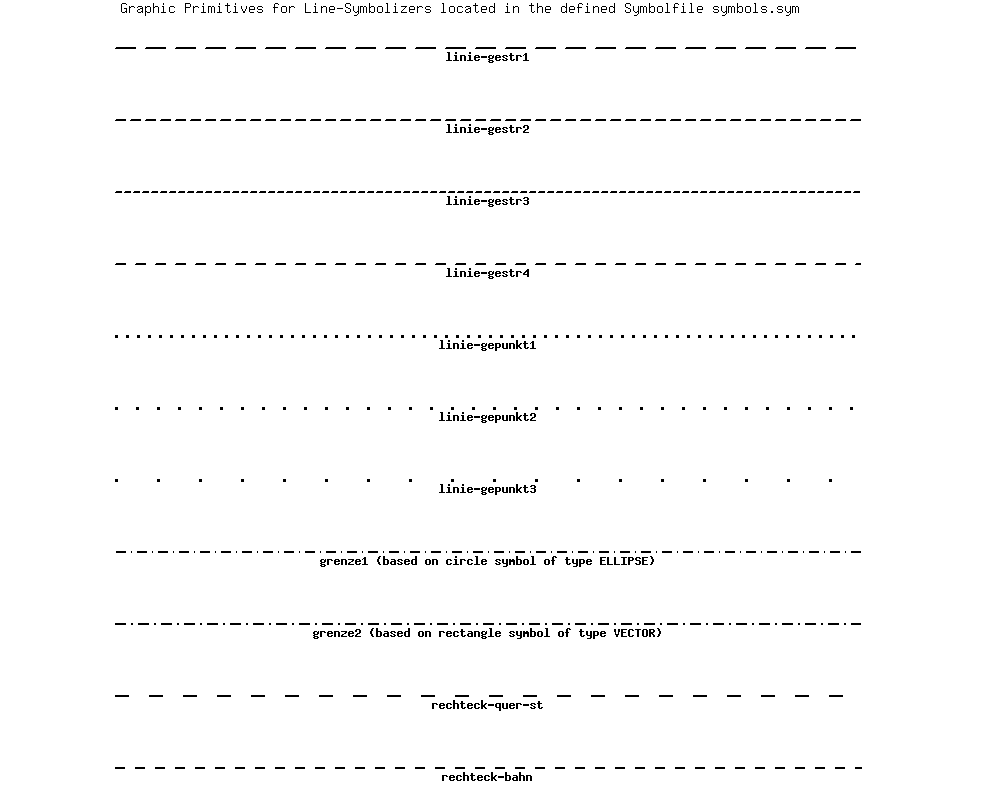
The following graphic shows a series of horizontal lines, but look at the variation. There is a whole language in these humble lines.
The Symbol Dictionary says: The equal armed solar cross is a… universal symbol, which can be found in every culture with a knowledge of the passage of time. It is the first truly theological emblem, marking not only the points of the solar calendar, but the juxtaposition of the realm of the material with the realm of the divine.
 |
The cross is in this case actuality two separate signs-
 |
First, a vertical axis, representing man, the body, and our upright posture, which is unique in the animal kingdom. The vertical line symbolizes the path from earth to heaven and the realm of spirit, symbolizing the dual nature of man, who embodies the spiritual and the temporal. The vertical axis equates directly to the human spine and to the tree of life, as well as to the axis mundi, the great pole around which the constellations of the zodiac revolve. These seemingly disparate ideas share a common idea- they link the earth and heavens. Thus is the concept of the connection between earth and heaven established- and also the divinity of man, who alone is built on this axis.
 |
The horizontal axis represents the path from birth to death, beginning to end, and linear time. This axis represents life on earth as a binary, linear process- life to death, beginning to end, and the dual nature of human existence evidenced by our symmetrical shapes: left and right, male and female, good and evil. These ancient concepts are embodied even in our language- our good, “righteous” side, and our dark, “sinister” side. (sinister having the original meaning “of the left hand”)
Both axes are also representations of the sexual nature of man, the vertical line representing the solar phallus, and the horizontal, the receptive, female earthly nature. Many early solar temples (such as Stonehenge) are not only solar calendars, but representations of the earth awaiting fertilization from the masculine energies of the sun. (The appearance of the rays of the solstice on these ancient solar altars represents the copulation of the gods) The cross, then, is the symbol of humanity- when the two axes are combined in a cross shape, they represent the cube of space, the four elements, and the binding together in man of matter and spirit. (The old geometrical puzzle of ‘squaring the circle‘ is a hidden reference to the continual difficulty of reconciling spiritual and material concerns.)
 Tao-Talk
How good is that first quote! Makes you think…
LikeLiked by 1 person
:)
LikeLike
Excellent article Li. In math class the horizontal line was never discussed as having a receptive, female earthly nature. It was always thought of as representing time. Time was always graphed as the independent variable and represented on the X axis and often the Y axis stood for distance and it was the dependent variable. Thus the distance traveled was always a result of where you were in respect to time.
LikeLiked by 1 person
This is a good supplement to the entry, thanks :) I am continuing to be fascinated by what I’m learning about ordinary symbols that turn out to be not so ordinary.
LikeLike
I love the quote about dots taking a walk. So cute.
LikeLiked by 1 person
:)
LikeLiked by 1 person
Thank you for the detailed insight!
The Multicolored Diary
LikeLiked by 1 person
You are welcome.
LikeLike
Wow, how informative! Excellent job done!👏👏
LikeLiked by 1 person
Thank you, Richa!
LikeLiked by 1 person
Very interesting Li. Loved the opening quote.
LikeLiked by 1 person
Glad you found it interesting, thank you.
LikeLiked by 1 person
My pleasure! 🙂
LikeLiked by 1 person
Informative post Jade. Did not know the significance and origins of the cross. Makes sense
LikeLiked by 1 person
Glad you enjoyed it, Namy.
LikeLike