
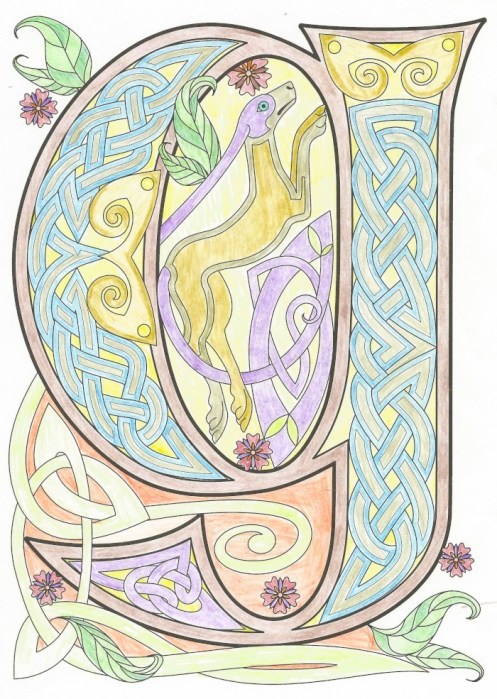
Gleti (Dahomey)

Gleti (pronounced gley-tee) is Moon Goddess in Dahomey mythology and serves as mother to all stars. Her name means “moon-moon.” She is revered within the Fon culture, primarily found in Benin, Togo, and southwestern Nigeria. Gleti is one of the three primary rain deities of Zaire; she passed on her duties to Bunzi when her mother was killed, who took on them as well. Mawu and Legba, two other creator goddesses in Sub-Saharan Africa, form the three creator goddesses.
She is considered a goddess of creation as she gave life to humanity; further, she is believed to possess powers associated with fertility enhancement. She often stands back and allows other pantheons to govern the universe while she stays out of it all. She is associated with the cycles of time and the mystical aspects of life. As the moon goddess, Gleti is symbolically represented by the moon and its phases. In terms of colors, silver or white could be linked to her, echoing the luminescence of the moon.
Myths
When Gleti’s husband casts his shadow on her face, an eclipse occurs and Gleti becomes an epitome of female strength.
Gleti is said to have given birth to numerous star children. This tale showcases her association with fertility and her connection to celestial bodies.
Gleti’s teachings stress the importance of cycles and transition, fertility, and the mystical connection between the celestial and terrestrial worlds. Her lore encourages an understanding and appreciation of life’s rhythms and phases.
Dahomean Beliefs
Dahomean mythology is practical: it explains why the world is, how people should live, and what’s waiting on the other side.
Dahomey is a place where the spirit world isn’t some distant abstraction, but as close and practical as a neighbor’s garden. In the past, the people of Dahomey, mainly the Fon and their relatives, lived their lives entwined with gods, ancestors, and legendary warriors. Their stories, rituals, and beliefs formed a tapestry then that wasn’t just vibrant but remains stubbornly alive—echoing through modern Benin, drifting across oceans to the Americas, and surfacing in ways you might not expect in the present day.
Dahomean belief is a wild, living collection—stories and traditions evolving across regions and generations. There is no “official scripture.” Instead, tales are told at fire-lit gatherings, and shrines dot the landscape; gods show up wherever people need them.
Three Things
1) the centrality of Vodun spirits—forces that govern everything from the weather to the iron in your hoe.
2) the foundational role of ancestors: the living and the dead form a single community.
3) a radical approach to gender and power: here, women are not only creators but warriors and rulers. Even today, you can’t talk about “Amazons” without thinking of the legendary Dahomey women.
The Vodun pantheon is a network of spirits each with their domain, starting with the great cosmic pair of Mawu and Lisa. Mawu is the cool, nurturing sky; Lisa, the fierce sun. Sometimes they’re twins, sometimes one androgynous being. Either way, they’re the architects of everything: Mawu-Lisa created the universe in four days—first the world, then the earth itself, then plants, animals, and finally people. The gifts keep coming: intellect, language, the senses, and finally, the blessing (or curse) of technology. In this pantheon, Gleti cycles through the months as a subtle, watchful presence.
It is important to acknowledge that Dahomean beliefs didn’t vanish with the kingdom’s fall in 1898. Instead, they traveled—carried by enslaved Fon and Ewe across the Atlantic, mixing with other African, indigenous, and Christian traditions to become Haitian Vodou and a host of other Caribbean religions. The link is direct: Dan becomes Damballah; Mawu-Lisa becomes Bondye; the Vodun become the Loa.
Modern Times
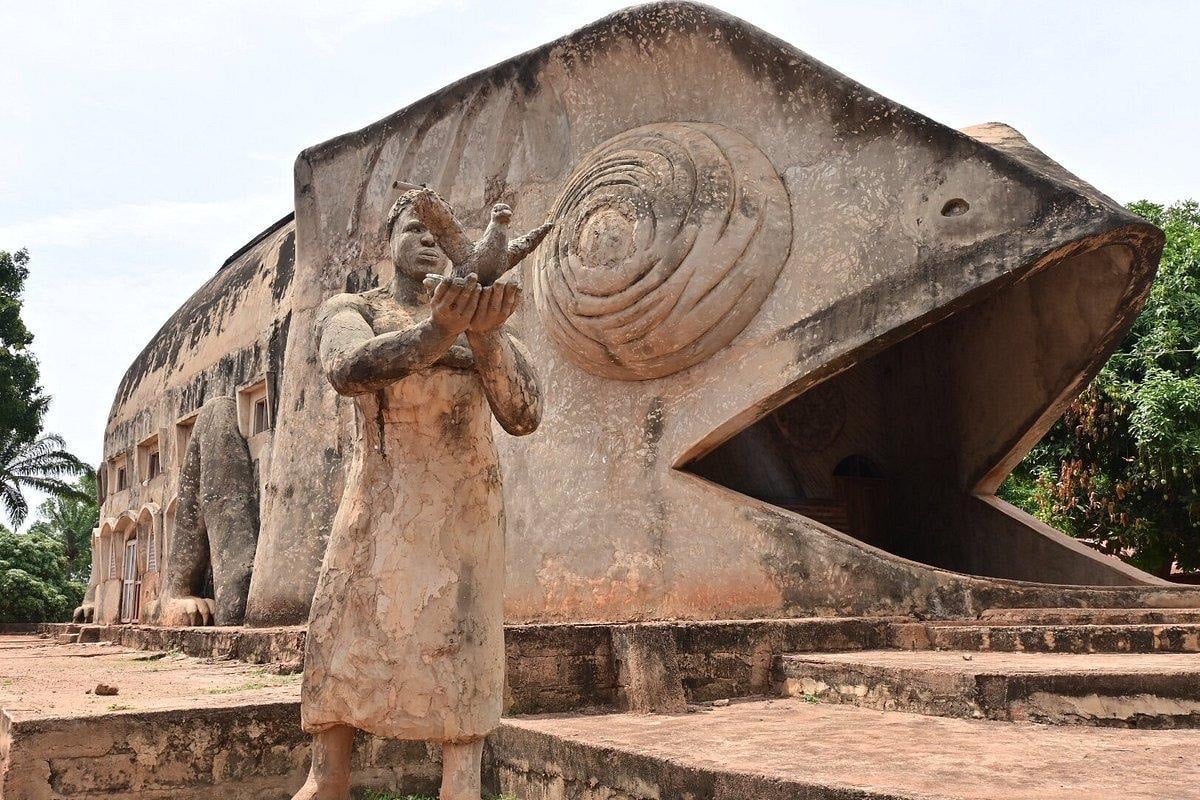
Back in Benin, traditional festivals still draw crowds. The old palaces of Abomey, now UNESCO sites, are covered with bas-reliefs—visual myths in stone and clay. In global pop culture, the legend of the “Amazons” was revived in films like The Woman King; the snake gods and water spirits show up in everything from novels to comics.
Dahomey’s mythology refuses to be a relic. It is living proof that the past can’t be shut out—that the world’s stories are more intertwined than we often realize. In the age of diaspora and globalization, the gods and ancestors of Dahomey still have something to say.
Question:
What do you think
of the Dahomean belief system?
Sources:
Divine Feminine Network
Star-Planete
Gods and Monsters
 Tao-Talk
I like the appreciation of life’s rhythms and phases: it makes sense. Love the sculpture of the frog in Abomey.
LikeLiked by 2 people
Marina, I do also. I’d like to visit this site sometime.
LikeLike
I find these mythologies fascinating to read about. Very different from western belief systems, and yet not so different either.
LikeLiked by 1 person
From Linzé – not sure why I couldn’t use my profile.
LikeLiked by 1 person
Linze, universal themes for sure. Thanks for reading and your comment.
LikeLike
Quite interesting. I wasn’t familiar with any of these. Thank your for dropping by my blog and for your comments.
Pradeep / bpradeepnair.blogspot.com
LikeLiked by 1 person
Happy to have made you aware of them, Pradeep. You are welcome on my visiting and comments.
LikeLike
Fascinating! And there’s a goddess named Lisa! 😀
LikeLiked by 1 person
Paula, glad you like this goddess. As you will see in another post, Lisa is actually a god!
LikeLike
Fascinated to know about Gleti. Her energies are surreal and so in synch with the moon. Had never heard of her so this is quite the revelation for me, a moon child. :)
LikeLiked by 2 people
Happy to introduce you to Gleti :)
LikeLiked by 1 person
Pretty neat to see the influences.
Tony (Danab Cycle)
LikeLiked by 1 person
Indeed!
LikeLike
This is such a rich and beautiful mythology. I believe we Westerners could learn so much from the beliefs of other cultures like the Dahomey. Instead, many of our leaders and our European forefathers have spent centuries trying to erase such cultures and belief systems. How utterly arrogant.
LikeLiked by 1 person
<3 <3 <3 Thank you for speaking truth to power, Steve.
LikeLiked by 1 person
You’re welcome, Lisa. We need to do so much better for the next generations. 🙏🏼
LikeLiked by 1 person
I found the portrayal of Gleti both vivid and grounding, especially in how her quiet presence contrasts with her role as a creator and mother of stars.
LikeLiked by 1 person
Thanks for sharing your thoughts, Tamara.
LikeLike
Before my retirement – what a joke, I’m busier than ever- I worked in a spiritual education environment. Your series in a book format would be eaten up. Some of it is way over my head ( I was employed to keep the others grounded), but this would be lapped up : it’s interesting and easy to read.
LikeLiked by 1 person
May, thank you so much. It’s pretty much copy and paste from others’ sites, then edited down for length. Hope you are enjoying your day.
LikeLiked by 1 person
Every day is a good day, Lisa. Enjoy yours too:)
LikeLiked by 1 person
This explains their wonderful art–it’s alive, along with all of the worlds they inhabit. A wonderful goddess and spiritual belief framework for living a good life. (K)
LikeLiked by 1 person
Heck yes, K!
LikeLiked by 1 person
I find the Dahomean belief system hard to comprehend for now. Vodun spirits have ample perspectives associated with it (I had to explore more about their beliefs and evolution). Interesting piece of information.
LikeLiked by 1 person
PH, thanks for looking a little deeper on their belief system. It seems complicated to me also.
LikeLiked by 1 person
Gleti is new to me. Thanks.
https://nydamprintsblackandwhite.blogspot.com/2026/04/g-is-for-green-girl-and-garden.html
LikeLiked by 1 person
She was new to me also, Anne.
LikeLike
this is very interesting Li! I really enjoyed learning about this goddess! X
LikeLiked by 1 person