
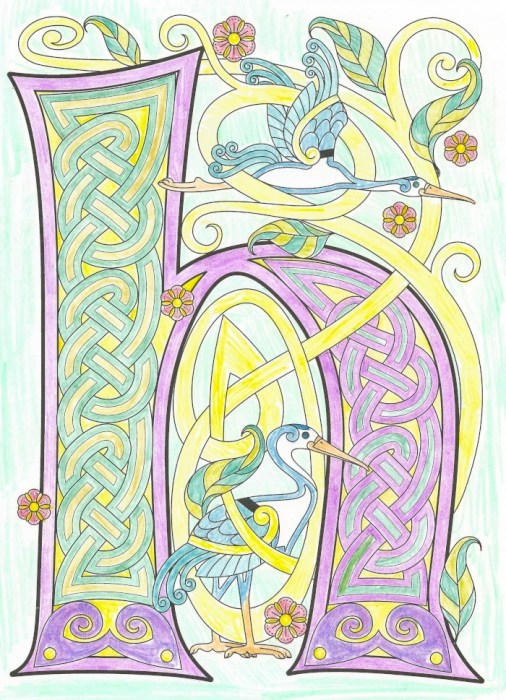
Hastseoltoi (Navajo)
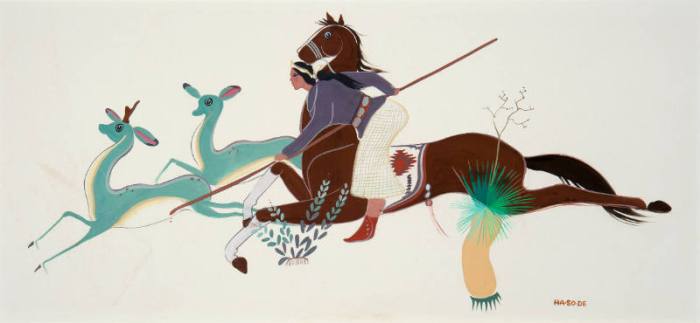
“Navajo Deer Hunt” by Narciso Abeyta Diné (Navajo), 1918-1998
at Philbrook emuseum
Hastseoltoi is a significant figure in Navajo mythology, known as the goddess of hunting and wilderness. She is often associated with the natural world and is believed to have the power to provide hunters with success in their endeavors.
In Navajo culture, hunting is considered a sacred practice that involves respect and gratitude for the animals that provide sustenance. As the goddess of hunting, Hastseoltoi embodies these values and is revered as a guardian of the natural world.
According to Navajo tradition, Hastseoltoi is a skilled hunter who possesses a deep understanding of the natural world. She is often depicted as a tall, slender woman with long hair and sharp features and is said to carry two arrows with her, and she wears a bow case.
She is said to be the wife and consort of Nayenezgani, the Navajo hero.
She is not to be confused with a forest spirit with a similar name.
According to some myths, she is one of the most agile deities in the Native American pantheon. Because of her agility, she can ride her horse without a saddle and shoot accurately at speed. To improve their hunting skills, hunters ask Hastseoltoi to help them. She leaves trails behind a jackrabbit as she speeds along.
In Navajo mythology, the concept of Hastseoltoi plays a significant role in understanding the relationship between the natural world and the spiritual realm. Hastseoltoi is often associated with the Earth and its vital energies, symbolizing the connection between the Navajo people and their land. The stories surrounding Hastseoltoi are rich and varied, offering insights into the values and beliefs of the Navajo culture.

Origin Story
The origins of Hastseoltoi can be traced back to the creation stories of the Navajo people. According to these stories, Hastseoltoi emerged during the First World, a time when the Earth was still forming. The Navajo believe that the Earth was created through a series of worlds and that Hastseoltoi was one of the key elements in this process. The tales of Hastseoltoi often involve the Hero Twins, who are central figures in Navajo mythology. They are said to have interacted with Hastseoltoi to bring about balance and harmony in the world.
Hastseoltoi is often depicted as a female deity or spirit, embodying the nurturing aspects of the Earth. Her presence is felt in the growth of plants, the flow of rivers, and the cycles of life that sustain all living beings. In Navajo belief, Hastseoltoi is responsible for providing the resources necessary for survival, such as food and water. This deep connection to the Earth is reflected in the rituals and practices of the Navajo people, who seek to honor and respect Hastseoltoi through various ceremonies.
Hastseoltoi holds immense significance in Navajo culture, as she represents the interdependence of all living things. The Navajo people view themselves as part of a larger ecosystem, where every element plays a crucial role in maintaining balance. Hastseoltoi serves as a reminder of this interconnectedness, emphasizing the importance of respecting and protecting the natural world. This belief is integral to Navajo identity and is reflected in their traditional practices and values.
Honoring the Goddess
Furthermore, Hastseoltoi symbolizes the fertility of the Earth. Many Navajo rituals are centered around agricultural cycles, celebrating the planting and harvesting of crops. Hastseoltoi is invoked during these ceremonies, as she is believed to bless the land with abundance and sustenance. The Navajo people express gratitude to Hastseoltoi for her gifts, recognizing that their survival depends on the health and vitality of the Earth.
The rituals associated with Hastseoltoi are diverse and reflect the various aspects of her character. One of the most important ceremonies is the Blessingway, which is performed to ensure harmony and balance in the lives of individuals and communities. During the Blessingway, participants call upon Hastseoltoi for her guidance and protection. This ceremony often involves singing, dancing, and the use of sacred herbs, such as sage and sweetgrass, to purify the space and invite positive energies.
Another significant ritual is the Corn Pollen Ceremony, where corn pollen is offered to Hastseoltoi as a symbol of gratitude and reverence. Corn is a vital crop for the Navajo people, and its growth is closely linked to the blessings of Hastseoltoi. During this ceremony, participants sprinkle corn pollen on the ground, as well as on themselves and their surroundings, to invoke the spirit of Hastseoltoi and ensure a fruitful harvest. This act of offering serves as a reminder of the importance of reciprocity in the relationship between humans and the Earth.
The Goddess in Art
Hastseoltoi is often depicted in Navajo art, where her essence is captured in various forms. Artists use symbols and colors to represent her connection to the Earth and her nurturing qualities. For instance, the color green is commonly associated with growth and fertility, while earth tones reflect the natural landscape. Through art, the Navajo people convey their respect for Hastseoltoi and the vital role she plays in their lives.
Storytelling is another medium through which the legacy of Hastseoltoi is preserved. Elders share tales that highlight her significance, teaching younger generations about their cultural heritage. These stories often illustrate the consequences of neglecting the Earth and emphasize the need for harmony between humans and nature. Through storytelling, the values associated with Hastseoltoi are passed down, ensuring that the wisdom of the past remains alive in the hearts of the Navajo people.
Hastseoltoi in Modern Times
In contemporary times, the teachings of Hastseoltoi remain relevant as the Navajo people navigate the challenges posed by modernization and environmental changes. The traditional knowledge surrounding Hastseoltoi serves as a guide for sustainable living, encouraging practices that honor the Earth. Many Navajo individuals and communities actively engage in environmental conservation efforts, drawing inspiration from the teachings of Hastseoltoi to protect their land and resources.
Moreover, the concept of Hastseoltoi resonates with broader environmental movements, highlighting the importance of recognizing the interconnectedness of all life. As people around the world grapple with issues such as climate change and habitat destruction, the lessons learned from Hastseoltoi offer valuable insights into fostering a harmonious relationship with the Earth. By embracing these teachings, individuals can contribute to a more sustainable future for generations to come.
Hastseoltoi serves as a powerful symbol of the connection between the Navajo people and their land. Through her stories, rituals, and artistic representations, the values of respect, gratitude, and interdependence are emphasized. As the Navajo people continue to honor Hastseoltoi in their traditions, they also adapt her teachings to address the challenges of the modern world. The legacy of Hastseoltoi is a testament to the enduring relationship between humanity and the Earth, reminding us all of the importance of nurturing our environment.
Sources:
Mythlok
World Mythos
Question: If you were a goddess responsible for looking over a tribe, what would be your most important duties?
 Tao-Talk
What a lovely drawing and very interesting background story, Lisa! I especially liked that the Navajo depicted the goddess as agile, and their offerings of corn pollen. If I were one of their gods, my duty would be to watch over them, to make sure all had food and rest on any given day, so I guess I would like to be the “Goddess of Pantry and Slumber”, lol.
LikeLiked by 1 person
Irene, I love your take on this goddess and love the duties you would take on for the people you watch over <3
LikeLiked by 1 person
It is interesting how each mythology places such emphasis on care for the earth, which is of course fundamental to the survival of all life. Living in a city with a high percentage of Indigenous people, I’ve been fortunate to witness many of their rituals and ceremonies. A very rich and contemplative culture, and I’m happy to see so many people, including the young, embracing traditional ways and passing them down to their children, like one of my daughters-in-law does.
If I were a goddess, I think focusing on caring for and nurturing young people, teaching and mentoring them to ensure the community was healthy and thrived over time.
LikeLiked by 1 person
I appreciate your insight into how each wants to care for the planet. Where did we go wrong? We are living a broken lifestyle of predating on our planet. May it please end, one way or another. I appreciate what you would focus on as a goddess, Steve. I don’t like placing such a heavy burden on the young to fix what we have broken, but I think it’s a wise decision.
LikeLiked by 1 person
Our society’s approach to the planet is indeed broken. Even when we see the miracle it is in the photos from Artemis II.
I also do not like the idea of passing our problems onto them, though I think teaching them wisdom and life skills will help them to cope with what the future brings.
LikeLiked by 1 person
I have always admired the Native American philosophies. Hastseoltoi represent a great way to look at nature and the world. I also love the first image!
LikeLiked by 1 person
Thanks, Marina!
LikeLiked by 1 person
This was new to me. I like the name and the origin story. :-D
Feels to good to hear that they engage in environmental conservation efforts and still have kept it going.
LikeLiked by 2 people
Happy to share new information. Yes on their conservation efforts.
LikeLiked by 2 people
My important duties would sort of include getting with or helping other tribes get along with each other.
Tony (Danab Cycle)
LikeLiked by 1 person
Tony that would be most excellent. We need a full timer on that one.
LikeLike
The Navajo have such respect for the earth and their place in it. Thanks for all this information about this wonderful goddess.
That’s a hard question. I guess I would want each member to become an integral part of the living world, connected to all and to each other. To belong. So many humans never feel they belong anywhere. (K)
LikeLiked by 1 person
Yes they do, K. You are very welcome. I love your idea of helping people to find a place to belong.
LikeLiked by 1 person
The important duty would be making sure the oral history is passed down; and when writing is introduced, make sure each child can at least write their name. If the culture is writing but nomadic, writing down the history into one book – one cart to carry from place to place. If not nomadic, then part of each child’s adulthood passing is copy two books – one for them to take home, one to add to the shrine’s library for borrowing.
LikeLiked by 1 person
The library religion is still Erin Penn
LikeLiked by 1 person
Good ideas and I think the oral tradition brings us full circle. Yes, a keeper of a tribes stories, and a library at the shrine <3 Thank you for your thoughtful response, Erin.
LikeLike