
Inanna (Sumerian)
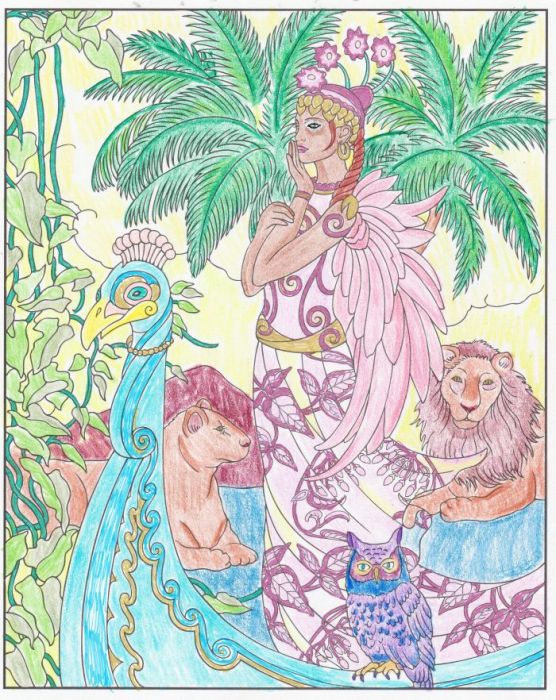
Inanna began her journey in the Sumerian city of Uruk, one of the oldest cities in Mesopotamia, sometime around 4000 BCE. Her original name, “Inanna,” is thought to come from the Sumerian phrase nin-an-ak, which roughly means “Lady of Heaven.” Later, as the Akkadians, Babylonians, and Assyrians took cultural center stage, she became widely known as Ishtar. Scholars believe Inanna and Ishtar may have started as entirely different goddesses; but over time, through cultural mingling and a whole lot of mythological cross-pollination, they merged into one mighty celestial figure.
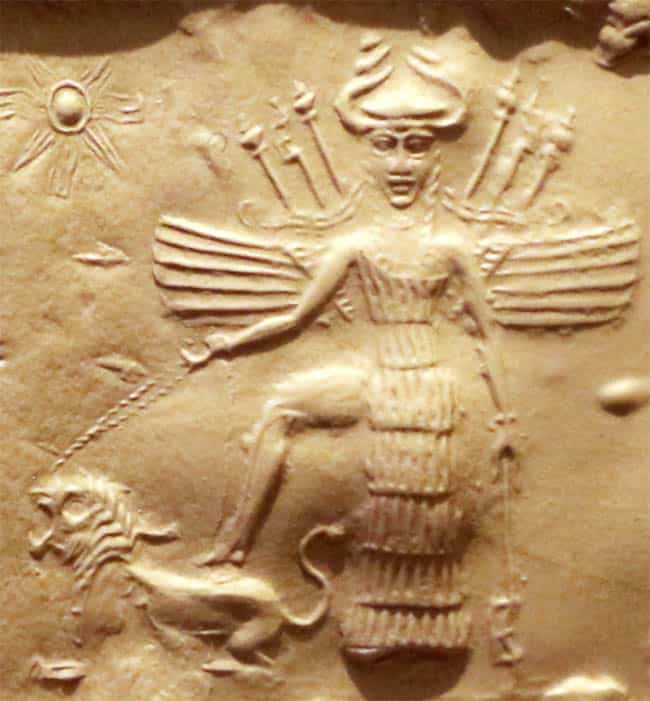
Inanna
Inanna’s most iconic symbols say a lot about her character: the eight-pointed star; lions, representing her ferocity and royal status; and the twisted knot of reeds, shaped like a doorpost, marking sacred thresholds. The reed doorpost was such a key symbol that it became her cuneiform logogram. These emblems paint a picture of a goddess both nurturing and terrifying, earthy and celestial, seductive and strategic.
While Inanna ruled over sensuality, romance, and procreation, marriage and motherhood were never really her thing. She embodied love in its wildest, most uninhibited form, that of irresistible magnetism, intoxicating beauty, and passionate desire. Her romantic partner was the shepherd god, Dumuzid, (aka Tammuz,) but their love was tumultuous, often filled with betrayal, longing, and death.
The Cult of Inanna
Inanna’s worship was so widespread that she ended up outshining even the national gods of entire empires—most notably in Assyria, where she eclipsed Ashur himself.
Inanna’s temple in Uruk, the Eanna (“House of Heaven”,) was the epicenter of her cult. Early on, she was worshipped in three forms: Morning, Evening, and Princely—each associated with a different phase of the planet Venus, her celestial symbol. Her connection to Venus added layers to her identity, tying her to cycles of appearance, disappearance, and rebirth, much like her famous underworld tale.
Inanna’s connection to Venus wasn’t just symbolic; it was astronomical. Ancient Mesopotamians recognized that Venus appeared as both a morning and evening star. Unlike the sun or moon, Venus disappears and reappears—mirroring Inanna’s mythic descent and return. Some scholars even argue that her movements in myths like Inanna and Shukaletuda reflect the actual trajectory of Venus in the sky. And modern astrologers link her underworld journey with Venus’s retrograde cycle, suggesting a kind of mythic astronomy that blended narrative with celestial observation.
Inanna’s cult was radical in more ways than one. Her temples were inclusive spaces that embraced gender-nonconforming individuals. The gala priests—men who often took female names and wore female attire—performed lamentations in the goddess’s dialect.
In the Akkadian era, kurgarrū and assinnu took on similar roles, often wearing mixed-gender clothing and performing sacred dances. These individuals were central to her rites, and their presence suggests that Inanna’s power challenged conventional gender norms.
Some hymns even describe Inanna transforming men into women—a potent symbol of her control over identity and transformation, in symbolic rather than literal enactments.
Inanna appears in more myths than any other Sumerian deity. She invaded others’ domains, acquired divine powers through cunning (and sometimes trickery,) and brought justice down on those who wronged her. Take, for instance, the myth where she tricks Enki, the god of wisdom, into giving her the mes—divine principles governing civilization. She gets him drunk, sweet-talks him into handing them over, then bolts back to Uruk with his prized possessions.
Inanna also claimed the Eanna temple from An, the sky god, and destroyed the rebellious Mount Ebih just for challenging her supremacy. She was justice incarnate, often alongside her brother Utu (later Shamash,) the sun god. Together, they were celestial enforcers.

Inanna in the Underworld
Inanna’s most haunting and iconic tale is her descent into the underworld, to the gloomy realm ruled by her sister Ereshkigal—not out of love, not in fear, but because Inanna wanted to extend her power even into the land of the dead. Before descending, she instructed her loyal servant, Ninshubur, to raise the alarm if she doesn’t return.
At each of the seven gates, Inanna is stripped of her royal garments and symbols of power, until she stands naked before the throne of Ereshkigal. The underworld judges strike her dead, and she is hung on a hook like a piece of meat. But Ninshubur follows through. Only Enki, the god of wisdom, agrees to help. He sends two genderless beings to sneak into the underworld and revive Inanna with the food and water of life. She returns—but there’s a price. The galla demons demand a replacement. Inanna chooses her lover, Dumuzid, who’s been lounging instead of mourning her. In a stunning twist, she condemns him, and the cycle of seasons is born: half the year he stays in the underworld, the other half he returns, replaced by his sister, Geshtinanna.
People across Mesopotamia adored Inanna. Women baked cakes in her honor, shaped like her divine image. Doves, another of her sacred animals, were sacrificed to her. These small, earthy offerings connected ordinary people to the celestial queen. And while her “sacred marriage” rite—where a king would symbolically unite with the goddess through a priestess—has long fascinated scholars, it’s not clear how literal or widespread this ritual actually was.
Inanna’s legacy didn’t stay confined to Sumer. She morphed and migrated into countless cultures. In the Levant, she became Astarte. In Syria, her mythological cousin was the fierce Shaushka. And the Greeks? They gave us Aphrodite—a love goddess with more than a little warlike swagger, especially in her early depictions. Aphrodite’s doves, her arms-bearing statues in Sparta, and even her myth with Adonis echo Inanna’s stories with Dumuzid. In fact, the Greek myth of Persephone’s descent and seasonal return probably borrowed a lot from Inanna’s journey to the underworld.
In the world-famous Epic of Gilgamesh, Ishtar appears with all her usual intensity. She proposes marriage to Gilgamesh, but he refuses, reminding her of all the lovers she’s spurned or destroyed. Insulted, she unleashes the Bull of Heaven. Gilgamesh and his friend Enkidu kill the bull, but the act leads to Enkidu’s death. It’s a story that showcases Ishtar’s dangerous allure, her wrath, and her inability to be tamed.
Source: WorldHistoryEdu
Question: What do you think the metaphor is in
Inanna’s journey to the Underworld?


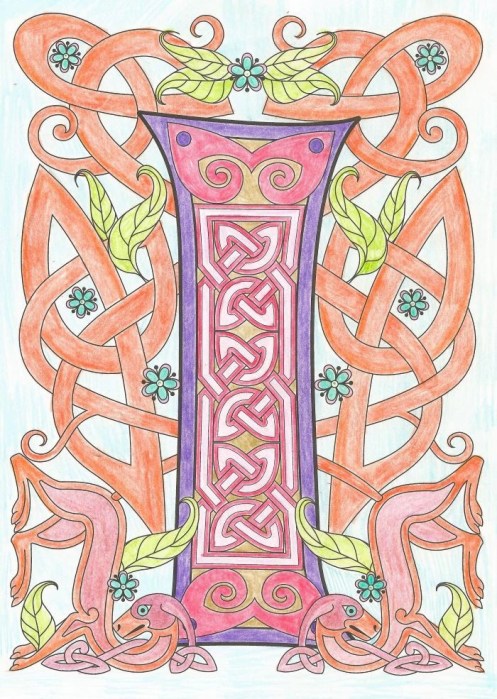
Fascinating! And I love your coloring page at the top. Metaphor? Hmm… maybe that the powerful will always try to conquer everything, even death (see the billionaire tech bros of today with all their attempts), but ultimately you pay a price for that…
LikeLiked by 3 people
Paula, thanks. I appreciate you sharing what you see in this goddess.
LikeLike
Thanks Lisa…this one I don’t remember….thats a good thing…love learning new.
LikeLiked by 3 people
Awesome, Max. Most of the ones I am covering are new to me.
LikeLiked by 2 people
I had no clue there were this many.
LikeLiked by 2 people
Max, as I read about them, I see Joseph Campbell was right, that the mythologies through times and cultures seem like variations on themes of the human condition.
LikeLiked by 2 people
That makes sense.
LikeLiked by 2 people
Absolutely enlightening
LikeLiked by 2 people
Fascinating story.And so old!
LikeLiked by 2 people
Marina, yes! So many of these goddess are from ancient times, yet they still live!
LikeLiked by 2 people
One of my fave epics and in my library too.
LikeLiked by 2 people
Paul, that’s awesome! If you have any other tidbits on her, please share them?
LikeLiked by 1 person
I knew the first story about Inanna being killed by her sister, but I found some other related water stories about her. Following Inanna’s rape by a gardener when she was resting under the shade of a poplar tree, she became enraged and sent three plagues upon the land, including turning all well water into blood, demonstrating her control over essential water sources. As a powerful goddess, she is often depicted with symbols of “upper and lower waters” and her presence is linked to the flooding of the Tigris and Euphrates, which was vital for agricultural prosperity.
LikeLiked by 2 people
Jim, I’m glad she held her rapist accountable, but I’m sorry others who were innocent had to deal with the plagues. Maybe the people held rapists accountable after that so Inanna held off on further plagues?
Inanna’s power is mighty. Thank you for sharing additional info on her.
LikeLiked by 2 people
Her art and colors are exquisite, Li and her call to life as a goddess admirable but wow her treacherous encounters horrific. ❣️
LikeLiked by 2 people
Cindy, you are so right. A lot of drama going on with this goddess and her world.
LikeLiked by 2 people
Tots!
LikeLiked by 2 people
I didn’t realize she had been tied so tightly to the changeable and the trans community, but it makes sense if you are to be both the evening and morning star – the transition time. She is passionate love and abrupt war. The little death, dead names, and the quiet between darkness and dawn – of course, she would have an underworld journey.
LikeLiked by 2 people
Thanks so much for your enlightened comment, Someone.
LikeLiked by 1 person
(facepalm) Erin, it was Erin Penn again. Sorry.
LikeLiked by 2 people
:) Thanks again, Erin.
LikeLiked by 1 person
Ishtar also one of the most famous box office bombs…
Tony (Danab Cycle)
LikeLiked by 2 people
Wasn’t Warren Beatty in that?
LikeLiked by 1 person
She seems to hold all of humanity inside her, the good and the bad, love and fear. I’ve read that story before, but I’m not sure what it means. Testing the limits? Rebirth? She didn’t really need more power. But such a journey always changes you in some way. (K)
LikeLiked by 2 people
I appreciate your insights about her, K.
LikeLiked by 2 people
wonderful! I loved this, and I find these posts really interesting! 🤗
LikeLiked by 1 person
Awesome, CA :)
LikeLike
The Bull represents determination and courage which is created and evolves in relationship.
LikeLiked by 1 person
I don’t think Inanna and I would be very sympatico! Best just to stay out of her way.
https://nydamprintsblackandwhite.blogspot.com/2026/04/i-is-for-incident.html
LikeLiked by 2 people
Anne, I think it would be a good idea also.
LikeLike