Vanth (Etruscan)
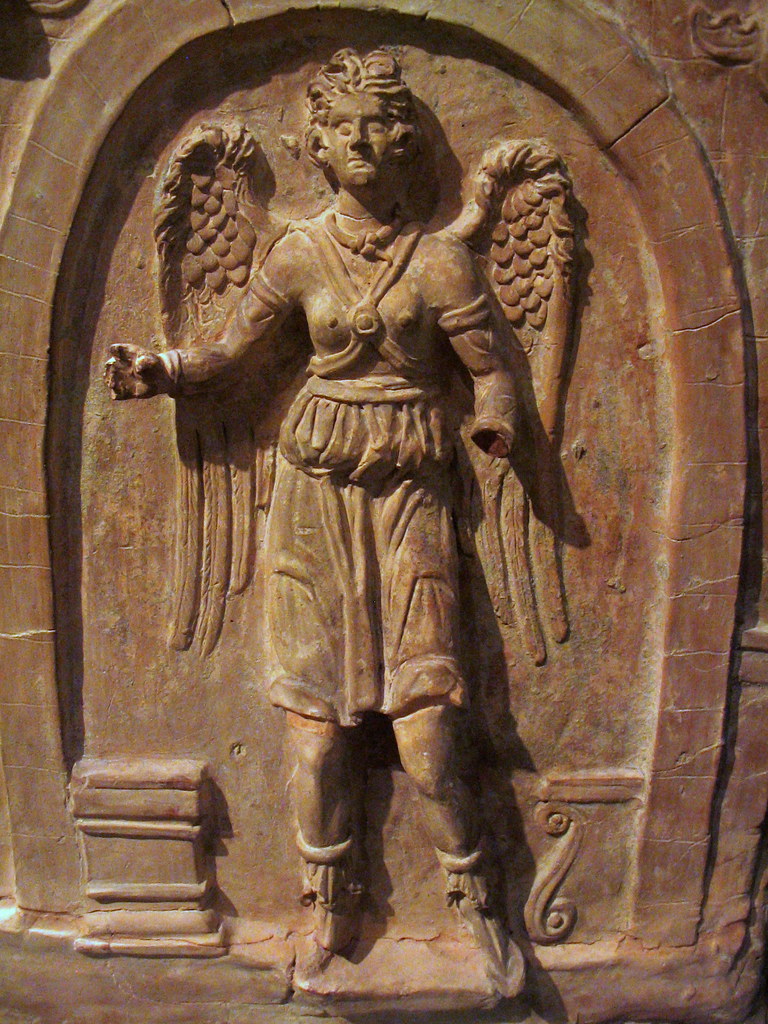
Vanth is a significant figure in Etruscan mythology, representing a unique aspect of the ancient beliefs of the Etruscan civilization. Vanth is known primarily as a psychopomp – a being whose responsibility is to escort newly deceased souls from Earth to the afterlife. This role is crucial in understanding how the Etruscans viewed death and the journey that follows it. The Etruscans had a rich cultural background, and their mythology was deeply intertwined with their practices surrounding death, burial, and the afterlife. Vanth is often depicted in various forms of art and inscriptions, showcasing her importance in Etruscan society.
The origins of Vanth can be traced back to the early Etruscan civilization, which flourished in central Italy from the 8th to the 3rd century BCE. The Etruscans had a complex pantheon of deities, and Vanth played a vital role within this system. She is often depicted as a winged figure, suggesting her ability to traverse between the realms of the living and the dead. Wings symbolize freedom and the ability to travel, which aligns with her function as a guide for souls. Her representation in art frequently includes a torch, further emphasizing her role in illuminating the path for the departed.
In Etruscan art, Vanth is often shown with a serene expression, suggesting a comforting presence for those who have passed away. This characteristic is essential in understanding how the Etruscans perceived death—not as a finality but as a transition to another state of existence. Vanth’s imagery often includes a mirror, symbolizing reflection and the idea of facing one’s past life as a soul embarks on a new journey. The combination of these elements makes Vanth a multifaceted character within Etruscan mythology.
Etruscan art is rich with depictions of Vanth, showcasing her significance in funerary practices. She appears on tomb walls, sarcophagi, and other burial artifacts. These representations serve not only as artistic expressions but also as a means to convey important beliefs about the afterlife. The frescoes and reliefs that feature Vanth often depict her in dynamic poses, emphasizing her role as a guide. This visual storytelling reinforces the idea that the deceased are not alone in their journey to the afterlife.
Key Artistic Elements Depicting Vanth
-
Wings: Symbolizing her role as a messenger between the worlds.
-
Torches: Representing the illumination of the path for the deceased.
-
Mirrors: Indicating reflection and introspection for the souls.
-
Serene Expressions: Suggesting comfort and guidance in the afterlife.
In addition to tomb paintings, Vanth also appears in ceramic and bronze artifacts. These items often served as offerings or were placed in graves to accompany the deceased. The consistent representation of Vanth across various forms of Etruscan art highlights her integral role in the culture’s understanding of death and the afterlife. The attention to detail in these artworks reflects the reverence the Etruscans had for their beliefs and the importance of ensuring safe passage for souls.
Vanth’s role in Etruscan religion is closely tied to the beliefs surrounding the afterlife. The Etruscans believed in an existence beyond death, and Vanth was a critical figure in facilitating this transition. Her presence in tombs and burial rituals underscores the importance of honoring the deceased and providing them with the necessary guidance. This belief system was reflected in the elaborate funerary practices of the Etruscans, which included elaborate tomb constructions and rituals designed to ensure the comfort of the departed.
The Etruscan belief in the afterlife was not uniform; it varied from one region to another and evolved over time. However, Vanth consistently represented a reassuring figure who accompanied souls on their journey. This aspect of her role is particularly significant in understanding the Etruscan view of death as a continuation rather than an end. The rituals associated with death often included offerings to deities, including Vanth, to ensure that the souls would be well-received in the afterlife.
Funerary Practices Involving Vanth
-
Elaborate Tombs: Built to honor the deceased and provide a comfortable resting place.
-
Offerings: Items placed in graves to accompany the soul on its journey.
-
Rituals: Ceremonies conducted to invoke Vanth’s guidance for the departed.
The rituals surrounding death were deeply meaningful for the Etruscans. They believed that proper funerary practices could influence the fate of the soul in the afterlife. Vanth’s guidance was sought through various offerings and prayers, emphasizing the community’s role in supporting the deceased. The collective effort to honor and remember those who had passed was an essential aspect of Etruscan culture, reflecting their understanding of life, death, and the journey that follows.
The Etruscan view of the afterlife was complex, influenced by various cultural and religious factors. Vanth, as a psychopomp, was a crucial figure in this belief system. The Etruscans envisioned the afterlife as a place where souls would continue to exist, often depicted as a banquet or a serene landscape. This perspective highlights their belief in the continuation of life beyond death, which is reinforced by Vanth’s role as a guide. Her presence suggests that the transition to the afterlife was not something to be feared but rather a journey to be embraced.
Moreover, Vanth’s guidance was seen as essential for navigating the challenges that souls might face after death. The Etruscans believed that souls could encounter various trials, and having a figure like Vanth to guide them would ensure a smoother passage. This belief in her protective role underscores the significance of her character within Etruscan mythology. The Etruscans placed great importance on preparing for the afterlife, and Vanth was a central figure in these preparations.
Concepts of the Afterlife in Etruscan Culture
• Banquets: Souls were believed to partake in feasts, reflecting a continuation of earthly pleasures.
-
Serene Landscapes: Depictions of peaceful settings where souls could rest.
• Trials and Challenges: The belief that souls might face obstacles in the afterlife.
The Etruscan belief in an afterlife filled with comfort and companionship is further illustrated in their tombs, which often contained items that reflected the deceased’s status and lifestyle. By including Vanth in these representations, the Etruscans reinforced the idea that the journey to the afterlife was significant and that the deceased would not be alone. Vanth’s role as a guide provided a sense of security for the living, who sought to honor their loved ones through proper funerary practices.
PLEASE WATCH THE VIDEO
Questions: what is it about belief systems
that leads them to try to destroy
other belief systems? Would you
follow a religion that expected you
to destroy other religions?
Source:
World Mythos


An afterlife greeter/guide so to speak…
I had no clue there were this many!
LikeLiked by 2 people
Vanth speaks to me more than many of the others. I would like to know more about Etruscan culture. I think I saw a Great Courses that included them. Did you watch the video? It says much more than the words in the post. I am convinced every culture has had its plethora of deities to look to for guidance and protection over time.
LikeLiked by 2 people
Yes I did but some things I had to go back over some parts….a lot of info in there! I like how they describd her as not scary or anything…but just there…a companion.
LikeLiked by 1 person
This is timely. I’ve a great curiosity about the Estruscan Way. I’ll have to read this a few times yet, but I do find the notion of a companioned afterlife understandingly comfortable.
LikeLiked by 1 person
YD, I also want to learn more about the Etruscans. I actually watched a Great Courses series on them, borrowed from the library. I need to watch it again.
https://shop.thegreatcourses.com/the-mysterious-etruscans
LikeLiked by 1 person
Oh. Nice. That sounds good. I listened to a few of their CDs.
LikeLiked by 1 person
They have quality lecturers. Have listened to several of their courses.
LikeLiked by 1 person
Brain food is good food. Right up there with shepherd’s pie and corned beef hash.
LikeLiked by 1 person
:)
LikeLike
🌒 🫓 🌘
LikeLiked by 1 person
really liked this Li 🌼🌼🙏🙏
LikeLiked by 2 people
I had not heard of Vanth. Wonderful post!
LikeLiked by 2 people
Lisa, thanks much.
LikeLike
Do the challenges in the afterlife involve dancing? I don’t want to think I would still need to worry about that. I am not much of a dancer. I don’t see that improving with rigor mortis. Or without a body.
Tony (Danab Cycle)
LikeLiked by 2 people
lol Tony
LikeLike
I believe that such systems blindly convince themselves that the superiority of their deity calls them to destroy other belief systems, which is of course what Europeans did in bringing missions to convert Indigenous peoples of other countries. I have followed such religions in the past, before becoming more aware of these acts. I no longer actively practice, and wholly reject the idea of subjugating another’s beliefs.
LikeLiked by 1 person
Steve, I very much appreciate your comment. It happens again and again doesn’t it.
LikeLiked by 1 person
You’re welcome, Lisa. It does indeed.
LikeLiked by 1 person
Vanth is a new one for me, so thanks for introducing her! I think if you want to convince people that your religion is better than theirs, you should do it by demonstrating how it makes people’s lives better. Then they can convert if they want. (But I have absolutely no problem with banning religious practices such as human sacrifice, etc.)
https://nydamprintsblackandwhite.blogspot.com/2026/04/v-is-for-vegetables.html
LikeLiked by 1 person
Anne, you are welcome. I had forgotten I watched a lecture series on the Etruscans a few years back. I just put in to borrow it from the library again.
LikeLike
You are right–I really like this goddess and will look for more images of her.
I actually do not understand why religions need to have everyone believe and follow the same ideas and rules that they do, or why they think they are special or superior because of what they believe, It’s a way for the leaders to consolidate power and blind obedience through fear I guess; religious leaders are not much different than kings or dictators. Spiritual belief is one thing, but organized religion is often a corruption of those ideas. (K)
LikeLiked by 1 person
Kerfe, thank you for your thoughts on it. Totally agree. The usual thing is a truly holy being arrives on the planet, gets treated like …. while they are alive, and then grifters turn their story into a religion. IT MAKES ME SICK!
LikeLiked by 1 person
That’s why I believe in following or honoring spiritual teachings, rather than worshipping.
LikeLiked by 1 person
Vanth comes across as such a strikingly compassionate figure, especially compared to some darker depictions of death guides.
LikeLiked by 1 person
Tamara, totally agree with you. I have to wonder why they tried so hard to erase her. Strike that, I know why.
LikeLike
I just finished reading “There is no Antimemetics Division” by qntm and central to the plot is some Ideas do not play well with others, and this is the case with some religions. Some Ideas want to take up all the place – nothing else can be there and you must subject yourself to them. Other Ideas are about sharing, exploring, and learning.
I used to make fruit salad to bring to my D&D group when we were all in our early 20’s and living on ramen and pizza. The guys and gals ate that before the chips because we were all starved for vegetable matter and healthy things. One time they asked me to stop putting the bananas in with the grapes, oranges, and apples. “Why not?” “Bananas don’t share.” – basically, you add banana to the rest of the cut up fruit, you got banana everything. Some religious are just bananas and don’t share. – Erin Penn
LikeLiked by 1 person
Erin, thank you for sharing that anecdote, it says it all.
LikeLike