
I first heard Hattie’s song on Bob Dylan’s Biograph boxed set. Once heard never forgotten. Hattie has haunted me ever since. Putting a human face to the monstrous acts of humans emboldened by protections offered by institutional racism may have what started me on a path of deprogramming my mind from the pervasive multi-media brainwashing that I’d been indoctrinated with since being a young child. Bob, if you are reading, THANK YOU for your unwavering social activism through using your music as a platform to tell stories about people like Hattie, Hurricane Carter, and others.
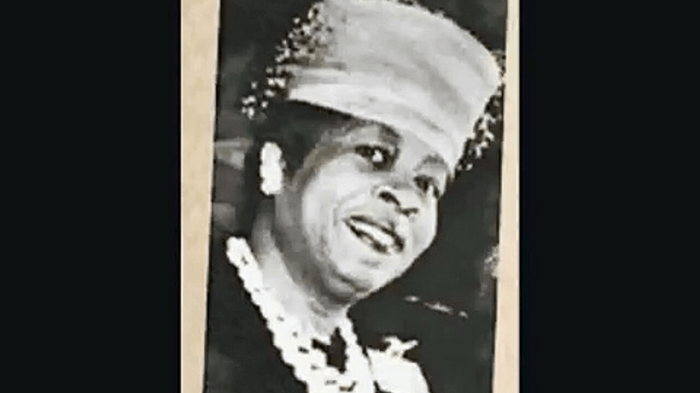
Before getting into information about the song, I want to share a poem I wrote awhile back, where the prompt asked us to write in the voice of another person. I wrote as best as I could in the voice of Hattie Carroll, on the night of her death.
My Name is Hattie
As many times as I look in the mirror and pin my hair just right,
so its beauty hides behind my scarf, out of lusting sight,
still the knife twists in my gut when I know what is to come,
where fine gentlemen ogle, touch, and blurt obscenities to
me, the lowly serving wench. When possible I keep a bench
between myself and them. My eyes stay low, I never smile
as no accuse shall swell of attempts to bewitch or beguile.
Still one of the regulars makes it his passion for harassment
through insults and taps with his ivory lion-headed cane.
With a small plot of land, I bet I could grow enough to feed
the too-many hungry mouths, sprouted seeds of a hot-blooded
husband’s passion. He’s long-gone sniffing on down the road.
Serving rich folks at the club, and evening-ends leftovers, is
enough, worth the price of my sense of self as worthy of love.
Tonight Mr. William is drunker than usual. He’s drinking doubles
after his wife slaps him and storms off in her white ermine coat.
“Hattie, you no good wench, get your black ass over here. Now!”
On the other side of the bench, eyes to the floor,“May I help you, Sir.”
The last thing I see is the ivory lion, coming close fast.
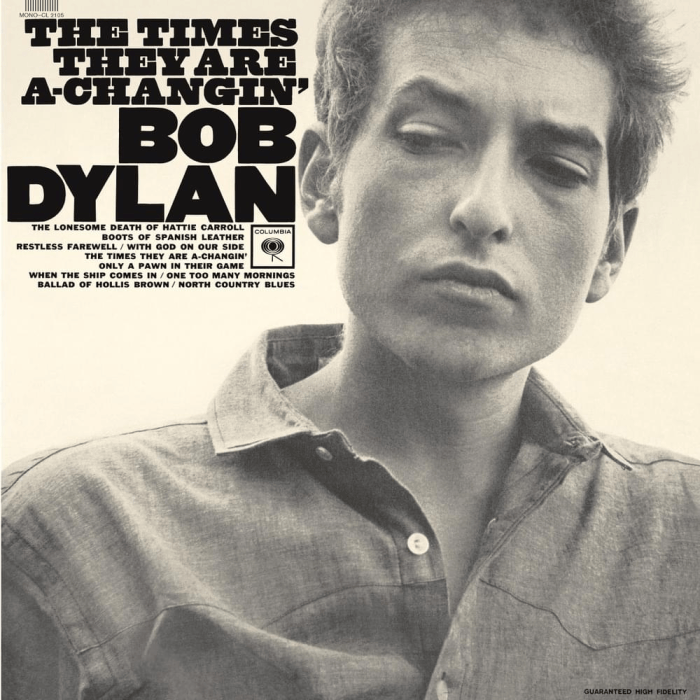
“The Lonesome Death of Hattie Carroll” is a protest song written by American musician Bob Dylan. Recorded on 10/12/63 it was released on Dylan’s 1964 album The Times They Are a-Changin’ and gives a generally factual account of the killing of a 51-year-old African-American barmaid, Hattie Carroll (née Curtis; b. 3/3/1911 — d. 2/9/1963) by 24-year-old William Devereux “Billy” Zantzinger (b. 2/7/1939 — 1/3/2009,) a young white man from a wealthy tobacco farming family in Charles County, MD.
The melody of the chorus is largely taken from a folk song called “Mary Hamilton.” The lyrics are a commentary on racism. When Carroll was killed in 1963, Charles County was still strictly segregated by race in public facilities such as restaurants, churches, theaters, doctor’s offices, buses, and the county fair (unless you were a servant!) The schools of Charles County were not integrated until 1967.
In Chronicles: Volume One, Dylan includes “The Lonesome Death of Hattie Carroll” in a list of his early songs which he feels were influenced by his introduction to the work of Bertolt Brecht and Kurt Weill. He describes writing out the words of “Pirate Jenny” (or “The Black Freighter”) in order to understand how the Brecht–Weill song achieved its effect. Dylan writes:
“Woody had never written a song like that. It wasn’t a protest or a topical song and there was no love for people in it. I took the song apart and unzipped it—it was the free verse association, the structure and disregard for the known certainty of melodic pattern to make it seriously matter, give it its cutting edge. It also had the ideal chorus for the lyrics.”
Source: wikipedia, where this is a lot more information about the murder
“The Lonesome Death of Hattie Carroll”
[Verse 1]
William Zanzinger killed poor Hattie Carroll
With a cane that he twirled around his diamond ring finger
At a Baltimore hotel society gatherin’
And the cops was called in and his weapon took from him
As they rode him in custody down to the station
And booked William Zanzinger for first-degree murder
[Chorus]
But you who philosophize disgrace
And criticize all fears
Take the rag away from your face
Now ain’t the time for your tears
[Verse 2]
William Zanzinger, who at twenty-four years
Owns a tobacco farm of six hundred acres
With rich wealthy parents who provide and protect him
And high office relations in the politics of Maryland
Reacted to his deed with a shrug of his shoulders
And swear words and sneering, and his tongue, it was a-snarling
And in a matter of minutes, on bail was out walking
[Chorus]
But you who philosophize disgrace
And criticize fears
Take the rag away from your face
Now ain’t the time for your tears
[Verse 3]
Hattie Carroll was a maid in the kitchen
She was fifty-one years old and gave birth to ten children
Who carried the dishes and took out the garbage
And never sat once at the head of the table
And didn’t even talk to the people at the table
Who just cleaned up all the food from the table
And emptied the ashtrays on a whole other level
Got killed by a blow, lay slain by a cane
That sailed through the air and came down through the room
Doomed and determined to destroy all the gentle
And she never done nothin’ to William Zanzinger
[Chorus]
And you who philosophize disgrace
And criticize all fears
Take the rag away from your face
Now ain’t the time for your tears
[Harmonica Solo]
[Verse 4]
In the courtroom of honor, the judge pounded his gavel
To show that all’s equal and that the courts are on the level
And that the strings in the books ain’t pulled and persuaded
And that even the nobles get properly handled
Once that the cops have chased after and caught ’em
And that the ladder of law has no top and no bottom
Stared at the person who killed for no reason
Who just happened to be feelin’ that way without warnin’
And he spoke through his cloak, most deep and distinguished
And handed out strongly, for penalty and repentance
William Zanzinger with a six-month sentence
[Chorus]
Ah, but you who philosophize disgrace
And criticize all fears
Bury the rag deep in your face
For now’s the time for your tears
Songwriter: Bob Dylan
Jim Adams is the host of Song Lyric Sunday. This week, Jim wants us to share a song that relates to civil rights, oppression, protest, revolution or social change

BONUS TRACK: Bob Dylan’s, “John Brown” covered by State Radio:


Excellent choice, Li. In fact, I was so moved by Hattie’s story, I wrote a “based on fact” fictionalized account in May, 2026. What a despicable act and a horrendous situation.
LikeLike
Thanks, Nancy. Will you please share a link to your story in the comments (only if you want to.)
LikeLiked by 1 person
My pleasure! https://theelephantstrunk.org/2026/05/09/the-last-step-2/
LikeLiked by 1 person
Nancy, thank you very much for sharing the link. Powerful and vivid writing, with a wish thrown in there that it had been captured on video.
LikeLiked by 1 person
A powerful song, and a great choice for today’s theme.
LikeLiked by 1 person
Thank you, Clive. It’s almost too painful to absorb.
LikeLiked by 1 person
And the sad thing is that you have a government trying to take you back to those days.
LikeLiked by 1 person
YES they are. Please pray for good outcomes at the midterm elections in November. So much is resting on them.
LikeLiked by 1 person
We all hope for a good outcome, and for free and fair elections which aren’t then cheated by him if he loses.
LikeLiked by 1 person
<3
LikeLiked by 1 person
What a horrendous act and some kind of justice- 6 months unbelievable- your poem is very moving- I’d not heard of the lady or the song before so thanks Lisa for sharing a perfect choice for this week 🩷
LikeLiked by 1 person
Ange, thank you. I wonder where Hattie’s children are now and how they got through after their mother’s murder.
LikeLiked by 1 person
Yes it must have been so very hard for them
LikeLiked by 1 person
Ange, I just found this Smithsonian Institute article on Hattie that is pretty in-depth:
https://folklife.si.edu/magazine/hattie-carroll
LikeLiked by 1 person
I’ve just read it so shocking
LikeLiked by 1 person
:(
LikeLiked by 1 person
Great choice, Lisa and Dylan certainly brough some new energy into folk music and changed it forever. Dylan took a few liberties with the real truth in this protest song, but most of it is factual. Zantzinger did strike Carroll with a toy cane after becoming angry that she was not serving him fast enough. However, medical examiners noted the physical blows left no direct marks or physical trauma causing death. Instead, the intense emotional stress and shock of the assault triggered a fatal brain hemorrhage.
LikeLiked by 1 person
Thanks, Jim. Your comment is debatable as to forensics. Zantzinger beat several others with the real cane (not a toy) that night, including a former football player, who took the cane from him and then beat the drunken pos down.
LikeLiked by 1 person
Thanks for adding that information, Lisa.
LikeLiked by 1 person
You are welcome.
LikeLiked by 1 person
So moving Li (all of it)
LikeLiked by 1 person
<3 :(
LikeLike
Wow, Li this is a wonderful post. Thanks for sharing.. Dylan .. a legend. Your poem is awesome.. xx
LikeLiked by 1 person
Thanks so much, Cindy. It’s a story that needs to be told.
LikeLiked by 1 person
You’re so welcome and YES indeed!! xx
LikeLiked by 1 person
Very good choice. I’m glad you found it. I’d not heard it or the bonus one. Such a sad tale, for sure.
LikeLiked by 1 person
Barbara, thank you. Glad to introduce you to them.
LikeLiked by 1 person
It does remind me very much of “Pirate Jenny”–I’d never made that connection before. Which may be why Judy Collins recorded both songs. (K)
LikeLiked by 1 person
It seems more fitting to have a woman sing it. Thank you for sharing Judy’s cover.
LikeLiked by 1 person
You’re welcome. That’s the one I first knew, actually.
LikeLiked by 1 person
Classic song…it’s one of the first Bob Dylan songs I heard really…I had some compilation album with this one on it. Nice write up Lisa!
LikeLiked by 1 person
Max, glad you know it. Glad he put it out on multiple records.
LikeLiked by 1 person
A powerful song on a powerful album. “Ballad of Hollis Brown” tells of another killing and is chilling to listen to. I can’t name anything as the “best”, but this album ranks right up there.
Dylan told Phil Ochs, “You’re not a folksinger, you’re a journalist.” Dylan considered it an insult, but some of his own best work treads that line between folksong and journalism. Isn’t that what the old troubadours were? Singing journalists?
LikeLiked by 1 person
Reading the lyrics and listening to some of Hollis Brown, something my mom used to say comes to mind: “There, but for the grace of God, go I.” Maybe it is the universality of Dylan’s lyrics that touches us at some level that makes him the maestro of chronicling the human journey.
Singing journalists is a perfect term. I also love the role that jesters have played over the centuries. I look at Colbert, Stewart, and Oliver as our modern jesters.
Thanks for reading, listening, and sharing your insights.
LikeLiked by 1 person